The Strait of Hormuz is open. But "open" is a relative term.
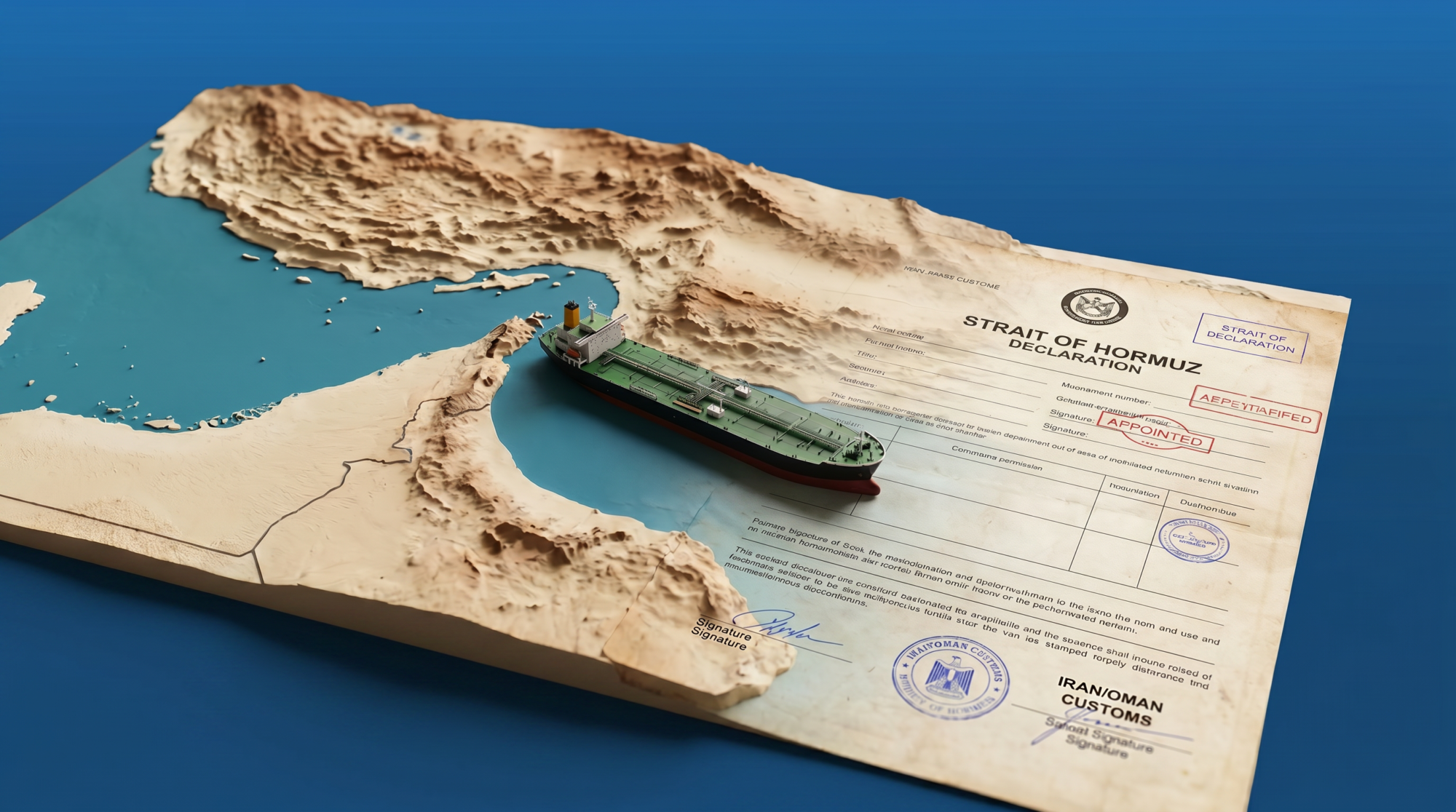
First, the good news: The Strait of Hormuz is set to reopen to shipping traffic. A framework agreement between the U.S. and Iran is set to be signed in the coming days. The bad news: A framework agreement is not peace. It is a ceasefire with a footnote.
What is available so far is apparently nothing more than a memorandum of understanding. According to U.S. Vice President JD Vance, it is a “very general document” about one and a half pages long. Only then are negotiations on a final agreement set to begin, with a 60-day timeframe. In geopolitics, a lot can happen in 60 days. And that is precisely the point.
The true nature of the agreement: a strategic move, not a final resolution
Trump initially announced that the strait would be opened “duty-free.” Shortly thereafter, the Iranian news agency Fars reported that Tehran had, at the last minute, added fees for “maritime services” to the agreement, a move confirmed by the Iranian Foreign Ministry. Thus, even during the announcement phase, the question shifted from “open or closed” to “open under what conditions.”
That’s the real point: the Strait of Hormuz isn’t simply opened or closed. It is opened conditionally—in exchange for fees, with restrictions, and under supervision. This is enormously practical from a diplomatic standpoint for both sides: Trump can claim success, Iran can demonstrate sovereignty, and neither side has to admit that the strait is, in fact, under new, granular control rather than simply being “free.”
A parallel that springs to mind: China and rare earths
We are already familiar with this model—opening up the market through regulation rather than by relaxing controls—from another commodity context. Starting in 2025, China will require customers to submit end-use declarations for rare earth exports as a prerequisite for export licenses, with the licensing process typically taking up to 45 business days. Inventory buffers are of little help because proof of end use and end user is required anew for every single shipment.
The result: China never has to openly explain to third countries why a shipment is delayed. It is sufficient, on a case-by-case basis, to withhold or delay the issuance of a license—formally, bureaucratically, and apolitically. No ambassador is summoned; no escalation is necessary. Control is exercised through red tape, not at the negotiating table.
The risks remain numerous
That is precisely the direction in which Hormuz is likely to develop. The passage is neither closed nor open, but “semi-open,” subject to customs duties, inspections, and documentation requirements, the pace and strictness of which can be politically controlled without anyone having to officially declare a closure. The risks remain correspondingly numerous:
- The issue of Iran’s uranium enrichment remains unresolved.
- The fees that were added later show that even the basic terms of the opening are subject to last-minute negotiation.
- Israel and Hezbollah remain at odds with each other.
- Hardliners on both sides could derail the process.
- And Trump is, after all, Trump. Results are quickly hailed as successes
Announces, negotiates from a position of strength, with price changes that can occur at a historically rapid pace.
For the commodities markets, this means above all: uncertainty remains the price, even when the headline reads “open.” Higher insurance premiums, freight rates, and energy costs are driving up the cost of supply chains. This affects far more than just oil; it ranges from metals to chemicals to strategic commodities. No one knows how tight the screws will be turned tomorrow.
The Actual Teaching
The real lesson, therefore, is no longer simply that security of supply begins with stable trade routes. It is that security of supply begins with the question of who decides on the permits that make a route usable in the first place. The Strait of Hormuz may be open, but the key to the gate is still held by whoever determines the conditions of passage.