The EU adopts America's tough stance - but China holds the stronger levers
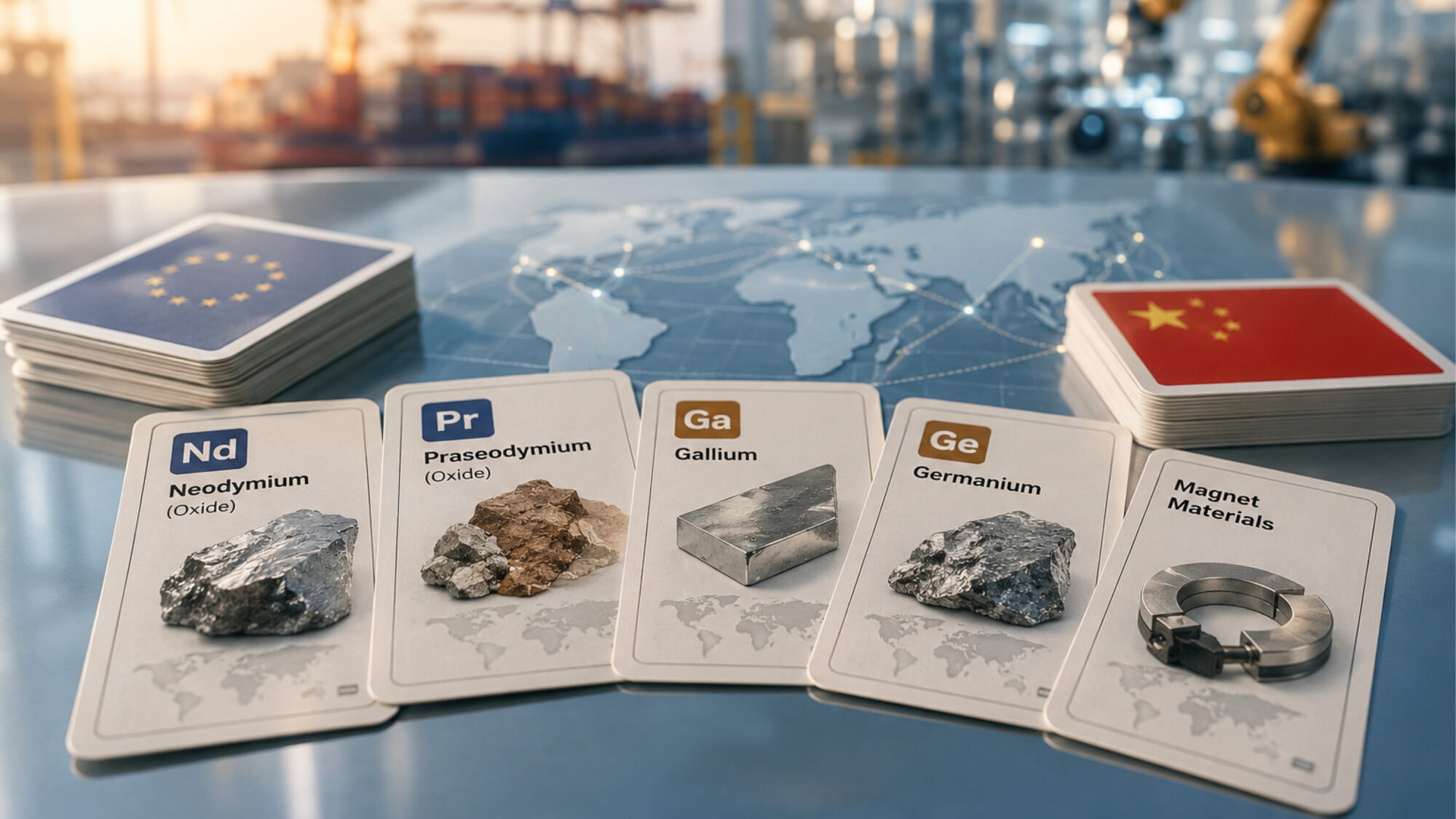
Brussels has unlocked the trade bazooka – and Beijing has understood the threat. The EU wants to use the anti-coercion instrument to impose punitive tariffs and countermeasures against countries such as China more quickly in future. The reaction was not long in coming: a member of the EU delegation recently sent to Beijing put it in a nutshell – “The Chinese side is threatening the EU with a trade war.” Not just a diplomatic phrase. A clear political declaration of war.
This raises two pressing questions: Is Europe copying America’s tariff policy? And does it even have the right cards to play?
A conflict with a different sign
Just two years ago, the USA imposed massive punitive tariffs on China – at times even 100 percent for electric cars. At the time, Europe mainly suffered collateral damage. The real exchange of blows took place between Washington and Beijing. Europe looked on.
This could now change fundamentally. For the first time, the EU itself threatens to become a direct adversary of China – and thus a player in an escalation spiral that it has so far only observed from the outside.
The decisive difference: the USA has been working for years to secure its raw material supply, build up its own processing capacities and gain global access to critical materials. Europe is still at the beginning in many of these areas. When it comes to rare earths, high-performance magnets and technology metals such as gallium, of all things, dependence on China remains high – and therefore a major target.
Is there now a threat of escalation with Europe?
The central question is whether a similar spiral is developing between China and the EU as previously between China and the USA – only this time with Europe as the target.
One specific date deserves particular attention: October 9. This is when Chinese export restrictions will once again be up for debate. It remains to be seen whether Beijing will extend existing measures, maintain them or target further commodities. But the direction is clear.
An expansion would be particularly painful for Europe’s industry. Unlike in the conflict with the USA, China could direct its influence against Europe this time. It is not speculation that light rare earths such as neodymium oxide or praseodymium oxide could also come under greater scrutiny in the future. The past few years have shown how quickly economic tensions can turn into targeted geopolitical leverage.
Dependence is not a partnership
China is on the strong side in the trade war – albeit not without restrictions. Beijing’s domestic economy is weakening, the real estate market is in crisis and many industries are suffering from massive overcapacity. Exports are now more important than ever for China.
This is precisely why the EU has become more valuable to Beijing. While the US market is increasingly sealing itself off, Europe remains one of the last major sales markets with real purchasing power. Yes, China needs Europe.
But interdependence is not a balance. Europe is dependent on Chinese commodities, magnets and industrial inputs – and Beijing has the opportunity to use precisely these dependencies as leverage. This is the core of the asymmetry: both sides need each other. But China decides when and how to turn off the tap.
Conclusion: not tariffs, but commodities will decide
It is not yet clear whether the current tariff debate will escalate into a real trade war. But one thing is certain: Europe is entering this conflict from a much more vulnerable position than the US has ever been in.
If the escalation continues, it will not be punitive tariffs that will ultimately be the decisive instrument of power – but commodities. And who controls them.