Trump is arm-wrestling – the EU is playing Mau Mau
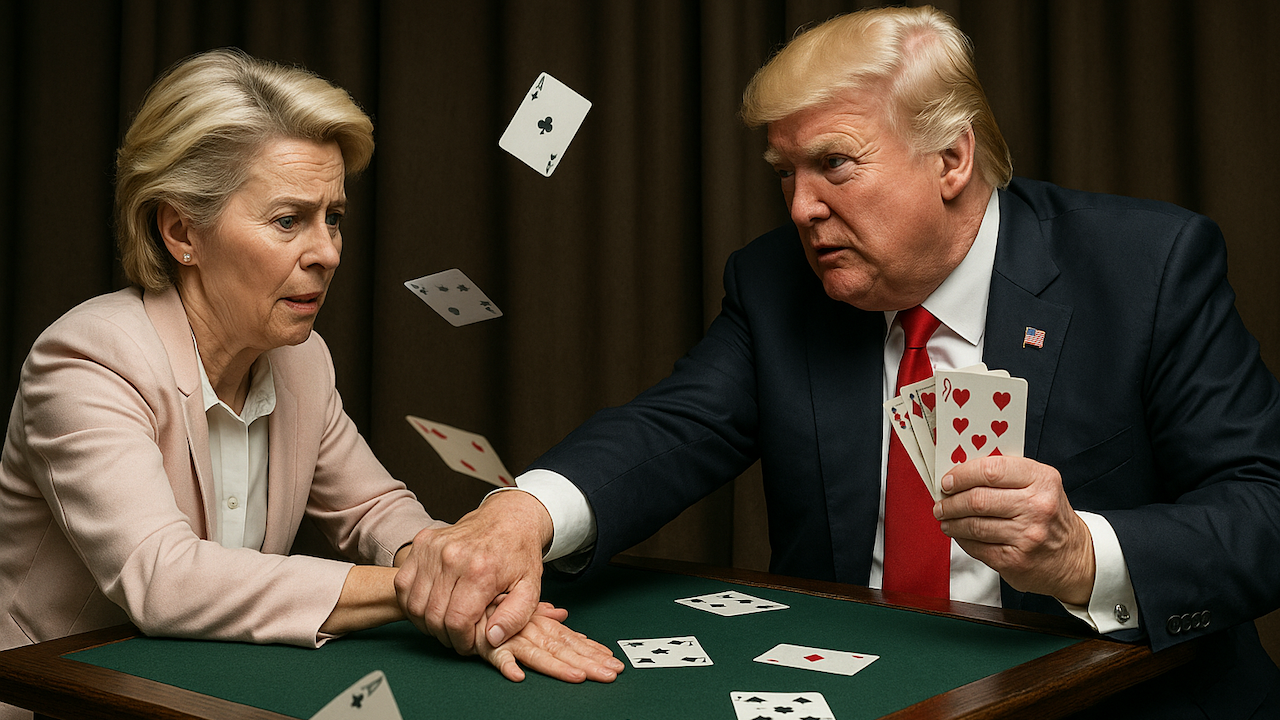
What the new tariff deal really means – and why it may initially weaken Europe, but could ultimately make it stronger.
How tariffs, currency effects (-manipulation) and dependence on raw materials are challenging Europe – and why we should be grateful to Trump.
At first glance, the new tariff deal between the EU and the US looks like a compromise: instead of the threatened 30% punitive tariffs, the US government is imposing “only” 15% on European exports. But a closer look reveals that this deal is a strategic advantage for the US—and a challenge for Europe.
The combination of tariffs and the 15% decline in the dollar over the last six months alone means an effective competitive disadvantage of more than 30% for European companies. Key industries such as mechanical engineering, chemicals and the automotive industry are particularly affected. A German passenger car that costs €50,000 in Europe suddenly costs €66,125 in the US. For an export-driven economy like Germany, this is a massive blow.
Why Europe fell behind—and what will change
Europe faces major challenges arising from global shifts in power and economic dynamics:
- Export dependence: Europe has relied heavily on exports to the US and China. This dependence makes it vulnerable when trade conditions tighten.
- Dependence on raw materials: rare earths, technology metals and energy commodities are essential for key industries—and Europe is heavily dependent on imports here.
- Geopolitical dynamics: while the US and China are deliberately strengthening their industrial and raw-material strategies, Europe has lost influence militarily and geopolitically. The war in Ukraine has shown how vulnerable Europe is. China and the US, by contrast, are significantly expanding their military capabilities.
Trump has deliberately exploited these weaknesses. His game is arm-wrestling. But tariffs, currency manipulation and subsidies only strengthen the US in the short term. And while Trump protects his uncompetitive industry, he has squandered the most important asset: trust. Without it, the US will sooner or later lose its global dominance.
Trump has won the battle—but not the war
Donald Trump may have won the battle, but whether he will win the war remains to be seen. While the US benefits in the short term from tariffs and subsidies, Europe is pursuing long-term strategies that will secure its competitiveness. Europe is investing heavily in key technologies such as artificial intelligence, semiconductor production and green energy. Projects such as the European chip alliance or support for hydrogen technologies show that Europe is ready to reduce its dependencies and build new industries. Infrastructure is also being modernised: from high-speed rail to sustainable cities—Europe is laying the foundations for a future-proof economy. These investments will not only strengthen competitiveness, but also create the basis for a new era of European innovation.
Conclusion: Thank you, Donald Trump
Trump has exposed Europe—and we should be grateful to him for it. He has shown us where our weaknesses lie, and that will ensure it does not happen again. With investments in future technologies such as AI, chips and green energy, a clear raw-material strategy and a new geopolitical direction, Europe will come back stronger. The battle may be lost, but the war is far from over. The next decade belongs to Europeans.
Or am I being too optimistic because I’m about to go on holiday and can’t take any more bad news? Is Europe lost, or will it come back with force? What do you think?