The US raises tariffs – will China respond by halting rare earth supplies?
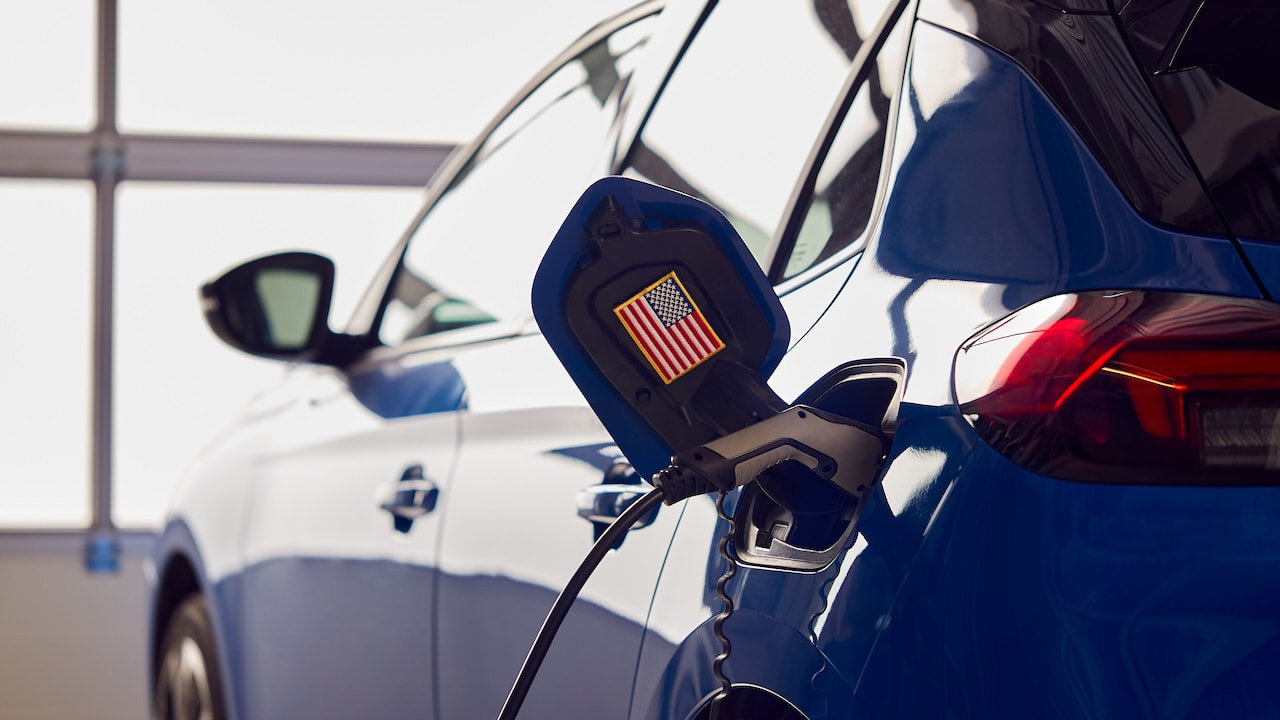
Earlier this week, we received news that the trade conflict between the USA and China (which some are now calling a trade war) has reached a new peak. US President Joe Biden has quadrupled the tariff on Chinese electric vehicles from 25% to 100%. As in chess, it’s now China’s turn to make the next move. What can we expect? Supply stops for raw materials? Or expanded export controls, like those the country imposed last year on the metals gallium and germanium? Neither would be surprising nor welcome.
Elon Musk warned about the dominance of Chinese manufacturers
The 100% tariffs on electric vehicles are just one of several protectionist measures by the US government against China. The following list provides a brief, partial overview:
US import tariffs against China
Product: Solar technology
Increase in %: from 25% to 50%
When: this year
Background: China controls more than 70% of capacity at every production stage, thereby jeopardizing global security of supply
Product: Semiconductors
Increase in %: from 20% to 25%
When: from 2025
Background: Even though the US only imports older semiconductors from China, the government considers them relevant to national security. Biden is therefore subsidizing new US chip plants with $39 billion.
Product: Steel and aluminium
Increase in %: from 7.6% to 25%
When: probably this year
Background: the US steel industry is focusing on lower-CO2 production processes enabled by more climate-friendly technologies
Product: Batteries and battery components
Increase in %: from 7.6% to 25%
When: this year
Background: China’s battery (over)production could already supply the entire world
Product: Magnets
Increase in %: 25%
When: this year
Background: The Pentagon is investing heavily in the magnet supply chain (as we reported)
These measures are highly targeted. According to the White House, they affect imports from China worth $18 billion. That is around 4% of total US imports from China. With this move, Joe Biden is also responding to demands from parts of US industry. For example, Tesla CEO Elon Musk warned as early as the beginning of the year about the dominance of Chinese manufacturers: “If there are no trade barriers, they (the Chinese manufacturers, editor’s note) will pretty much destroy most other car companies in the world.”
China’s low-cost exports are likely shifting to Europe
Many Western countries accuse China of unfair competition because the country supports its industry with state aid. China counters that this is not true and announced “appropriate responses” to the American “repressions.” Experts now fear that China’s low-cost exports will shift to Europe, as the lucrative sales markets in the US are shrinking. For this reason, the EU is also discussing imposing tariffs on Chinese electric vehicles. Original quote from the Chair of the European Parliament’s Trade Committee, Bernd Lange (SPD): “It is not a question of whether.” Rather, it is now only a matter of clarifying how high the tariffs should be. According to analysts, they would have to be as high as 50% if manufacturers are to feel them. However, this would certainly provoke a trade war with China along the lines of the American model.
High tariffs could be harmful
However, electric vehicles are not actually the problem, as the example of BYD shows. According to the Federal Motor Transport Authority, 4,139 BYD electric cars were newly registered in Germany last year. Out of a total of 2.8 million new vehicles, that corresponds to a market share of just 0.1%. Of the 524,200 electric cars newly registered in Germany in 2023, this represents a share of only 0.8%. Such high tariffs might therefore not be necessary at all—or could even be harmful.
Europe is not prepared for supply bottlenecks in magnets and rare earths
Nevertheless, German industry could and should understand the situation as a call to become more independent. Europe is far less prepared for supply bottlenecks than the US.
So far, there is only a single European refinery where rare earths can be further processed into oxides and metals—located in Sillamäe, Estonia. As a result, no one can predict whether a shortage of these critical raw materials may soon be expected.
Joe Biden speaks of a turning point for e-mobility
One solution for the future is to diversify supply chains. Vakuumschmelze (VAC), for example—Germany’s largest magnet manufacturer—sources its rare earths through a partnership with MP Materials, the operator of the Mountain Pass mine in the northern US. Just yesterday, VAC CEO Dr Erik Eschen was a guest at the White House, where Joe Biden spoke of a turning point for many important industries such as e-mobility and sustainable energy generation. In this context, the US President presented measures intended to drive investment and jobs in these areas—certainly no coincidence given the new tariffs. In addition to the US, Australia, South Africa, Vietnam and Canada also offer potential alternative sources of raw materials for European companies. Will our industry, with the support of policymakers, make use of them?
Buy rare earths now!
In the meantime, there is a clear buy recommendation: terbium oxide, dysprosium oxide and neodymium oxide. Without these rare earths, our industry cannot produce high-performance permanent magnets. This makes these commodities indispensable for our future.