The Great Battle for Tomorrow's World: How the US and China Vie for Dominance
The geopolitical competition between the USA and China is unfolding across key technologies, commodities, and demographic challenges.
Escalation in the Pacific and Strategic Positioning
The US recently deployed an advanced anti-ship missile system in the Philippines – just 300 kilometers from China. This measure highlights the increasing geopolitical tension between the two superpowers, which are on a collision course not only militarily, but also technologically, economically, and in resource security.
The AI Race of the Superpowers
In the field of Artificial Intelligence (AI), the technological lead of the US, supported by companies such as OpenAI, Google, and Nvidia, remains unchallenged. With 109 large language models, the US dominates, while China has developed only 20 such models. Nevertheless, China is making rapid progress through state-sponsored projects. The AI model “DeepSeek” surprised the industry with its high efficiency and caused Nvidia shares to plummet. This demonstrates how US export controls stimulate Chinese innovation. The US had prevented China from accessing high-quality chips, particularly the powerful Nvidia H800 and A800 models, forcing China to develop its own alternatives and make progress.
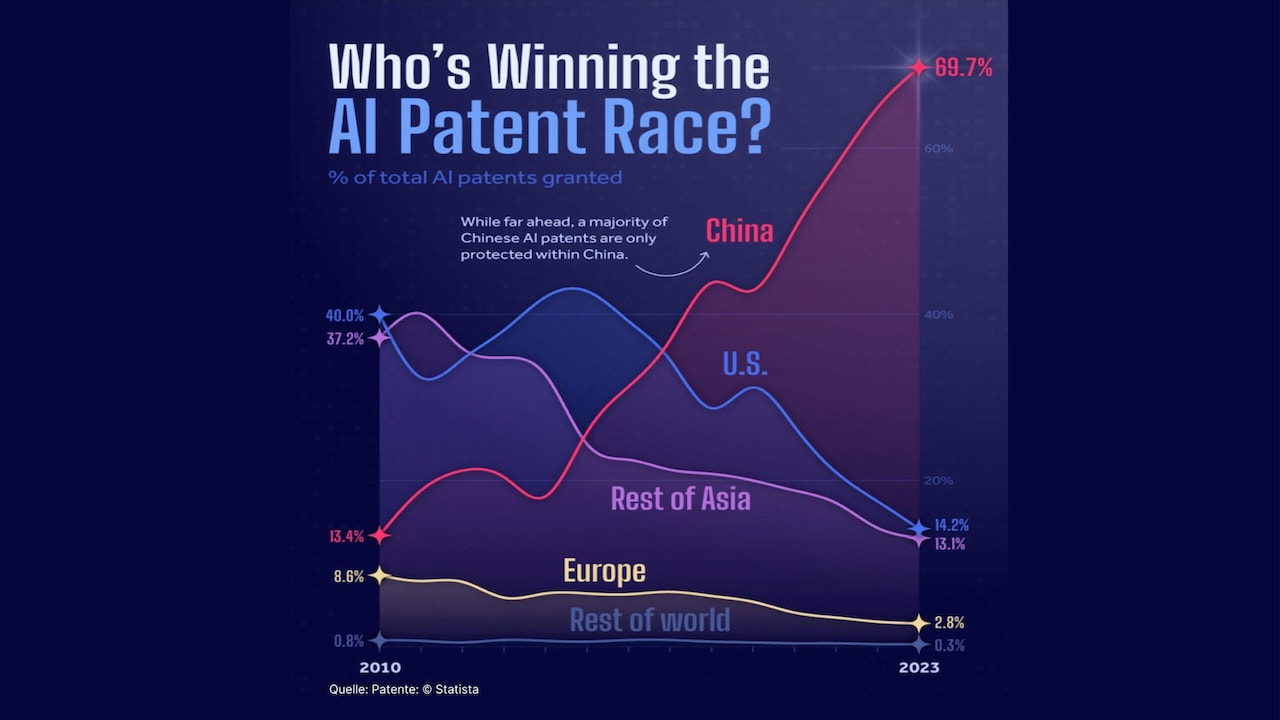
China dominates AI patent applications and invests massively in research and education. Almost half (47%) of the world’s top researchers come from China, although many migrate to the US. However, while China is strong in optimizing existing technologies, the US leads in fundamental and transformative innovations.
Whoever successfully combines AI, supercomputers, and quantum computers in the end will likely achieve decisive technological supremacy. The ability to crack encryption systems is also of strategic and security-political importance. Only those who are ahead here can gain long-term control over communication, data security, and critical infrastructure.
Advances in Nuclear Fusion
In nuclear fusion, nations are also engaged in intense competition. In 2022, the US achieved a historic breakthrough at the National Ignition Facility, which for the first time achieved net energy gain. Nevertheless, the energy expenditure remains a challenge due to inefficient laser systems.
China, on the other hand, impresses with its “EAST” reactor, which heated plasma to 120 million degrees Celsius and maintained it stably for over 17 minutes – a world record. In parallel, China is building the world’s largest laser fusion facility, CFETR (planned completion by 2035), surpassing the US National Ignition Facility by 50% in size. China’s coordinated state planning contrasts with the privately driven innovations of the US, such as Helion Energy, which aims to deliver electricity from nuclear fusion by 2028.
Commodities as the Key to Power
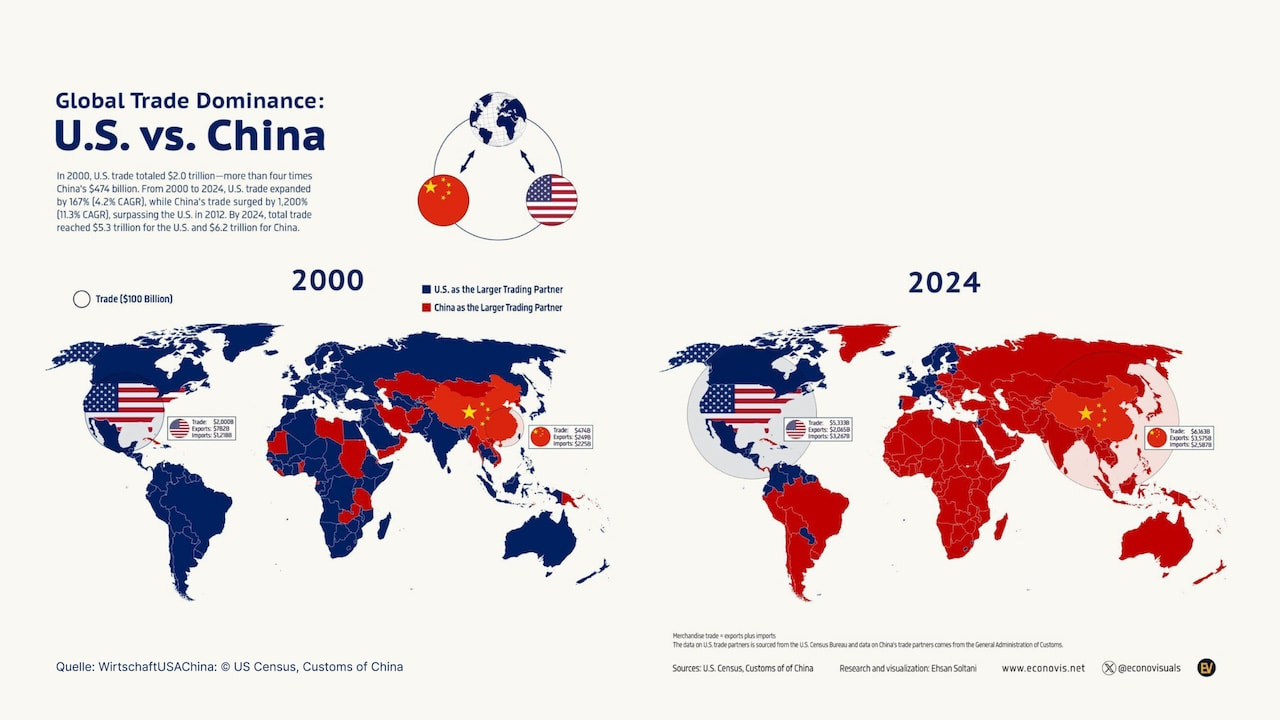
Securing commodities is becoming increasingly central in this power struggle. Artificial intelligence, battery technologies, and the semiconductor industry rely on critical materials. Gallium, germanium, and rare earths like praseodymium oxide play a particularly key role. The US benefits from strategic partnerships with commodity-rich countries, while China catches up through the expansion of global trade relations and state investments. China’s dominance in processing these commodities and its ability to export them efficiently are crucial for its competitive advantage. Nevertheless, uncertain trade relations and dependence on imports could critically influence China’s endurance on the global stage.
Humanoid Robotics in Comparison
The US leads technologically in robotics, with companies like Boston Dynamics and Tesla developing more advanced humanoid robots such as “Optimus.” However, mass production is not yet in sight. China, on the other hand, focuses on scalability and cost-efficiency. Companies like Fourier Intelligence have achieved the first series production of humanoid robots with “GR-1” robots, primarily used in care or industry. With a 40% market share, Chinese robotics companies surpass the US, whose share is 30%.
Demographic and Economic Challenges
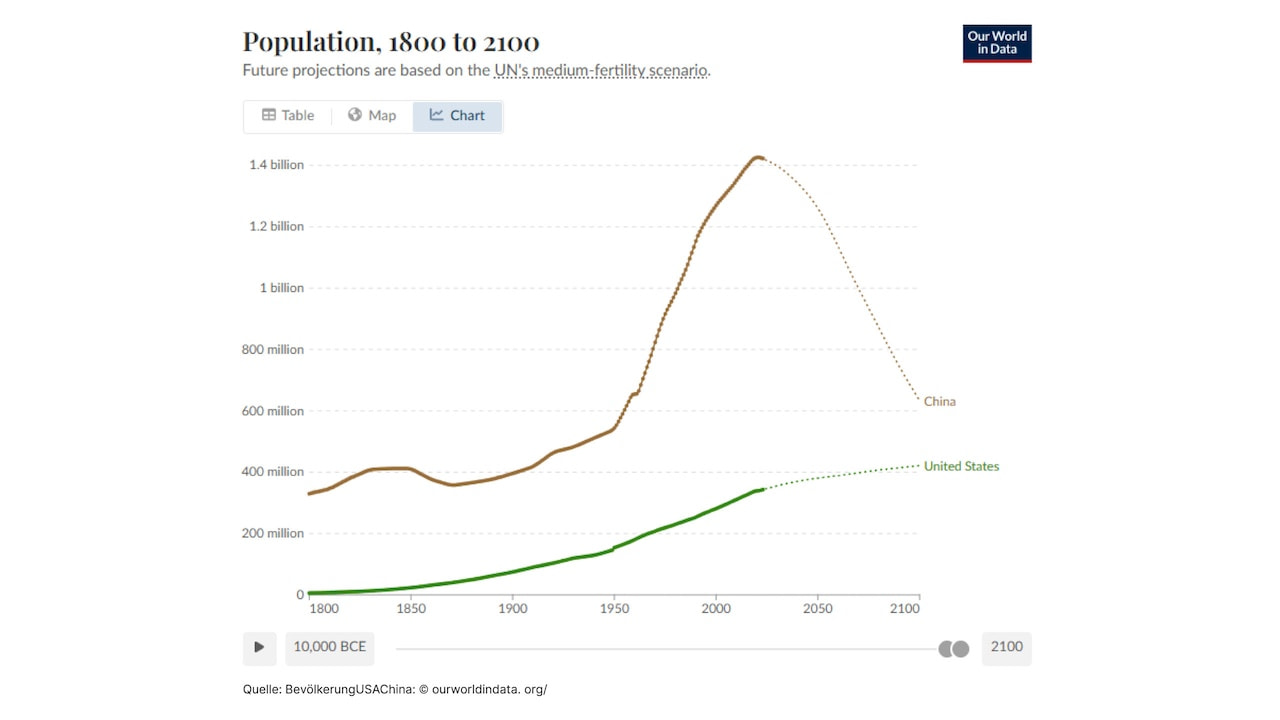
China’s population is shrinking and aging rapidly. The dependency ratio of those over 65 will rise to 58.8% by 2050, with only 2.4 workers per retiree. In 2024, the ratio is 5.4:1. This aging population could significantly burden China’s economic growth and stability.
In contrast, the US is experiencing moderate population growth. Thanks to higher immigration and birth rates, the US population is projected to grow from 345 to 381 million by 2050. The dependency ratio in the US will only moderately increase to 2.7:1, providing a more stable foundation for the economy and innovation.
Conclusion
The global competition is no longer just about technological innovations. Access to critical commodities, demographic trends, and strategic investments will determine who gains the upper hand. The US secures its pioneering role through innovation, while China’s long-term planning and expansion are impressive. Ultimately, success will depend on who can set standards, efficiently combine technologies like AI and supercomputers, and strategically and sustainably control commodities. The ability to circumvent encryption systems could also decisively tip the scales in favor of one of the two nations. It’s not just about innovation, but about absolute control over the foundations of tomorrow’s world.