The Dragon at the Lever: Why China Can Escalate or End Crises from Taiwan to Cuba at Any Time
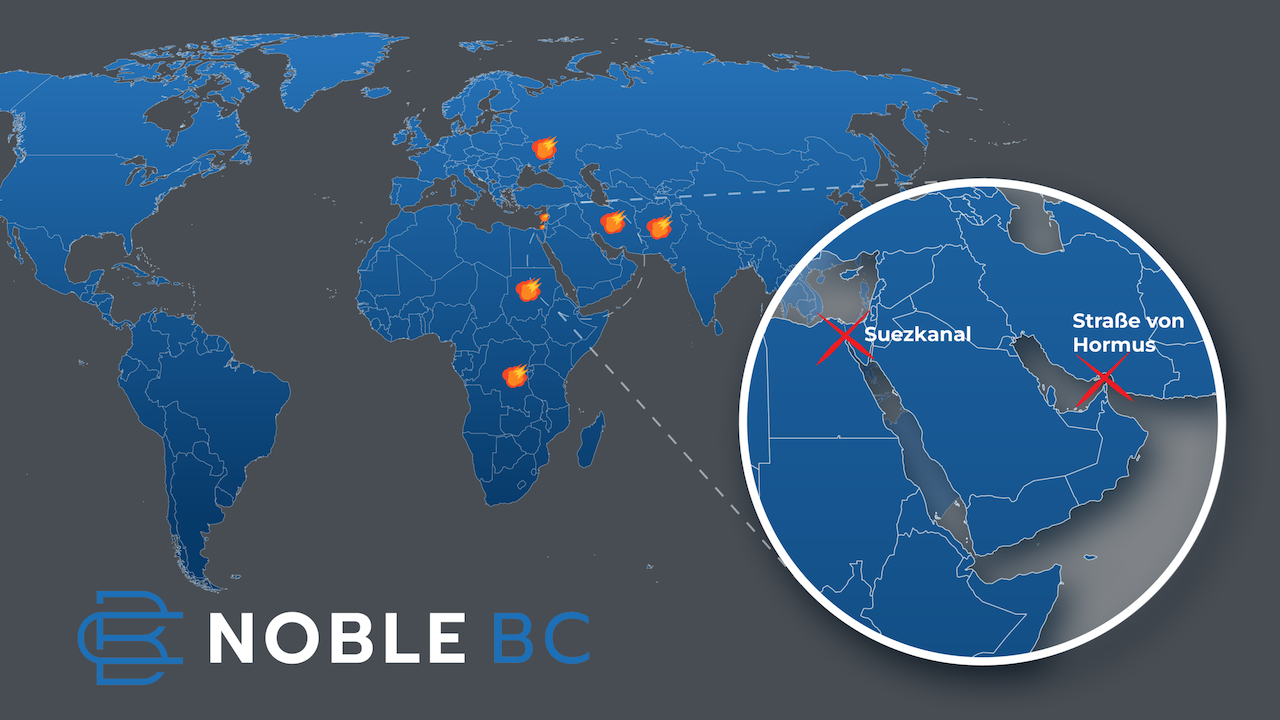
Do not read this article if you want to sleep well at night:
While the US Federal Reserve decides on the key interest rate tonight, geopolitical conflicts are dramatically expanding. Hotspots range from the Strait of Hormuz, Taiwan, to Cuba, where the US, following its intervention in Venezuela, is now blocking oil supplies and hinting at a “takeover.” The article analyzes the global interdependencies of these crises, warns of supply chain risks, but also relativizes apocalyptic scenarios due to the strategic constraints of the actors.
The global economic situation faces a historic turning point on March 18, 2026. At 7:00 PM German time, the US Federal Reserve (Fed) will announce its latest interest rate decision. This fixed date coincides with a phase of extreme geopolitical fragmentation affecting almost all continents: from the Strait of Hormuz, Taiwan, and the Caribbean to Eastern Europe.
Taiwan: Between Routine Drills and a Real Risk of War
In the Pacific, China continues to keep up the pressure on Taiwan unabated. While Beijing portrays current military drills around the island as routine, its rhetoric on a forced “reunification” is reaching new levels of severity. Experts warn against ignoring these signals: unlike in the past, today’s global distraction by crises in the Middle East and Latin America could appear to Beijing as a strategic “window of opportunity.” Even so, military analysts downplay the risk of an immediate “worst-case scenario”: under current conditions—with uncertain resupply and global attention focused on other flashpoints—a blockade would remain an enormous logistical and political risk for China. The “encirclement” should therefore be seen more as a highly aggressive instrument of pressure. Yet the danger lies in the details: even without an open invasion, such a blockade would immediately disrupt the global chip supply and trigger worldwide economic chaos, as the island’s semiconductor production is indispensable for virtually all technology sectors.
Middle East: Iran, the Houthis, and Fears over Hormuz
In the Middle East, the situation escalated dramatically in early March 2026. Following coordinated US and Israeli strikes on Iranian targets, Tehran is showing a surprisingly confrontational stance, bolstered by reports of Chinese deliveries of missile-fuel precursor materials. Particularly explosive is the role of the Houthi rebels in Yemen, who could, in theory, threaten massive disruption in the Red Sea and at the Suez Canal if escalation continues. The worst-case scenario remains a simultaneous closure of the Strait of Hormuz and the Bab al-Mandab Strait at the southern end of the Red Sea, which would choke off global oil traffic.
What stands out, however, is this: the Houthis are currently behaving with surprising restraint. Is this a sign of de-escalation, or merely a tactical regrouping ahead of a decisive strike?
Although military officials attest that Iran has the capability to block these oil routes at short notice, analysts warn against overdramatization: attacking global oil supplies while its own stockpiles are empty and resupply is uncertain would be a strategic suicide mission for Iran. Tehran’s current self-confidence could therefore also be a bluff, built on distraction by other global crises—while the Houthis’ observed calm is more likely a wait for the order that will pull the lever on the world’s most important trade route.
Latin America: Venezuela, Cuba, and the US Threat Posture
While the world looks to Asia and the Middle East, an acute crisis has been brewing in the United States’ own hemisphere. After the controversial US military intervention in Venezuela in January 2026 and the installation of a new leadership under former Vice President Delcy Rodríguez, President Trump has massively increased pressure on Cuba.
The United States has enforced a complete blockade of oil shipments from Venezuela to Cuba and is actively seizing oil tankers in the Caribbean Sea. The consequences on the island are devastating: daily power outages, fuel shortages, and a rapidly worsening humanitarian crisis. Trump has now openly hinted at a “takeover” of Cuba should Havana refuse to enter into a US agreement. Cuba’s head of state Díaz-Canel spoke of “fascist state terrorism,” but dependence on Venezuelan oil makes the island vulnerable to coercion. Experts see a dangerous game here: Trump is exploiting Cuba’s weakness to create further geopolitical facts after successes in Venezuela and the Iran conflict. The risk of direct military intervention or regime change in the Caribbean is as high as it has been since the Cuban Missile Crisis of 1962.
Ukraine and the Global Shift in Power
While media attention is focused on the new flashpoints in Asia and Latin America, the war in Ukraine continues unabated—though with a surprising twist: Ukrainian forces are making significant military gains and are currently pushing Russian troops back markedly. This dynamic does not change the fundamental danger: the simultaneity of conflicts could still overstretch Western resources and is interpreted by critics as the beginning of a fundamental weakening of NATO structures. International law appears to be losing importance in the face of the sheer power interests of the United States, China, and Russia; what counts again is primarily one’s own ability to assert oneself. Particularly fatal remains the dependence on Chinese intermediate products for ammunition production, which could slow the West down in a protracted war of attrition despite current successes.
The Fed at the Center of the Storm
Against this backdrop, today’s Fed decision meets highly sensitive markets. The question is how Jerome Powell will respond to these multiple geopolitical shocks. An oil shortage caused by blockades in the Caribbean and the threat in the Middle East could reignite inflation, while at the same time the risk of recession rises due to disrupted supply chains (Suez, Hormuz, Taiwan). The Fed must walk a fine line between fighting inflation and supporting the economy.
All Eyes on China: The Quiet “Superweapon” of Commodities
While military maneuvers in Taiwan and the Middle East dominate the headlines, the real power to end all current conflicts lies in Beijing. China has an economic lever that could bring any Western war effort and high-tech production to a standstill within two to three months. A complete embargo on rare earths—especially elements critical to the defense industry and chip manufacturing such as yttrium and scandium—together with a halt to chip exports from Taiwan, would cause Western supply chains to collapse immediately. Without these commodities, no new missiles, no fighter jets, and no advanced control systems can be produced. This “superweapon” makes China the quiet arbiter of all geopolitical crises: whether Ukraine, Iran, or the Caribbean—no conflict can be sustained in the long term without Beijing’s tolerance or active raw material supply. China’s current restraint is therefore not weakness, but strategic positioning; refraining from the threat of a total embargo is currently more effective than any military strike, as it keeps the West in permanent uncertainty about its own ability to act.
Conclusion: Preparation Instead of Panic
The sum of these crises—from Hormuz to the Caribbean to Taiwan—creates a sense of threat that tempts many to “rather just go back to bed.” Yet a sober analysis shows that while the risks are real and the geopolitical shifts profound, a full global collapse (“worst-case scenario”) is by no means the base case. Mutual economic dependence, nuclear deterrence, and logistical constraints also have a de-escalating effect.
Businesses and citizens should remain vigilant and run through scenarios for energy price shocks and supply-chain disruptions without giving in to panic. Today’s Fed decisions will be an important indicator of how resilient the global financial system is to these external shocks.