Not Evergrande but aging is China's main problem
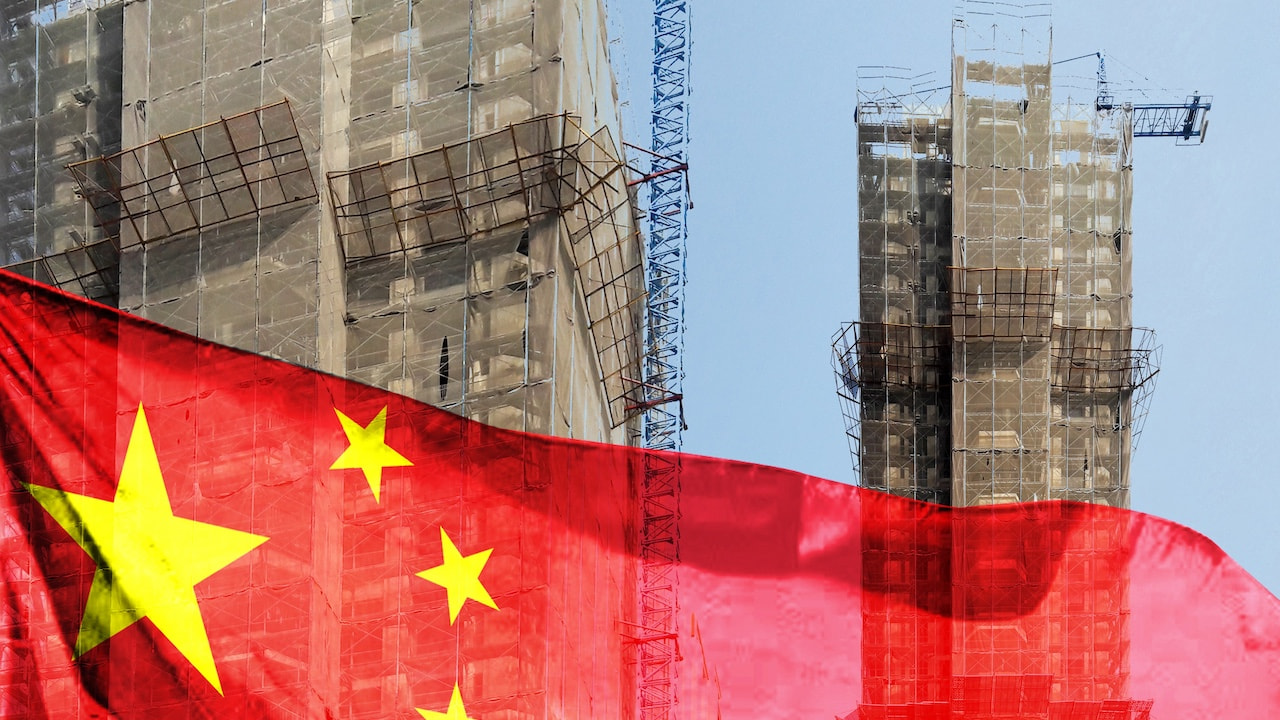
The Chinese should actually be looking forward to the new year with full confidence. At least, that’s what President Xi Jinping encouraged them to do in his New Year’s address. While some companies are facing difficult times, and some people are experiencing problems with job searching and daily life, overall development is positive. Those familiar with Xi Jinping know that his admissions of problems are rare, and are thus appropriately alarmed. Furthermore, the recently decided liquidation of real estate giant Evergrande could indicate that more is amiss than the head of state suggested to his audience.
Evergrande is just the tip of the iceberg
Evergrande is a name that stands for greatness – or rather, stood for it. The liquidation of the real estate giant is a done deal. The reason for this is that the conglomerate is 300 billion dollars in debt, making it the most indebted developer worldwide. Furthermore, the conglomerate has not yet presented a concept for its restructuring. However, Evergrande is merely the tip of the iceberg. The entire real estate sector is in crisis, threatening China’s role as a major engine of the global economy.
One in five Chinese under 25 unemployed
The times when the real estate sector accounted for up to a third of economic output are over. More and more local governments are falling into debt because they are no longer generating revenue from the sale of building land. In June, approximately one in five Chinese under 25 was unemployed. The Chinese government has not released unemployment figures for the subsequent months. Some of those affected are moving back in with their parents and helping with household chores. Last year, millions of posts on Chinese social media platforms used the hashtags #Fulltimeson and #fulltimedaughter. The reason for these developments is not only the real estate market but also the overall economy, which has been recovering slower than predicted since the pandemic.
Few measures to stimulate growth
However, Beijing has refrained from implementing measures to stimulate growth. “After many years of infrastructure promotion, it has been over-stimulated,” writes Jens Hildebrandt of the Beijing Chamber of Commerce. To combat high youth unemployment, Xi Jinping called for young people to be moved out of cities and sent to work in rural areas. This is reminiscent of the 1960s and 70s, when Mao Zedong dispatched over 16 million people to work in villages.
The real problem will be aging
In the long term, however, China’s problem could be the exact opposite of youth unemployment, namely aging. According to Yi Fuxian, Senior Scientist in Obstetrics and Gynecology Research at the University of Wisconsin-Madison, the proportion of Chinese aged 65 and older could rise from 14 percent in 2020 to 35 percent in 2050. This would mean that instead of five workers aged 20 to 64 for every person aged 65 in 2020, this ratio would drop to 2.4 workers by 2035. By 2050, there would be only 1.6 workers caring for an elderly person – a humanitarian catastrophe and a huge loss of economic output.
Xi Jinping must and will act
An infrastructure program with interest rate cuts can indeed do little to counteract such a development. However, Xi Jinping is under time pressure. A window is closing. China must and will come up with a solution to these problems – and very soon.