Monthly Review November 2025: Europe's Late Catch-up
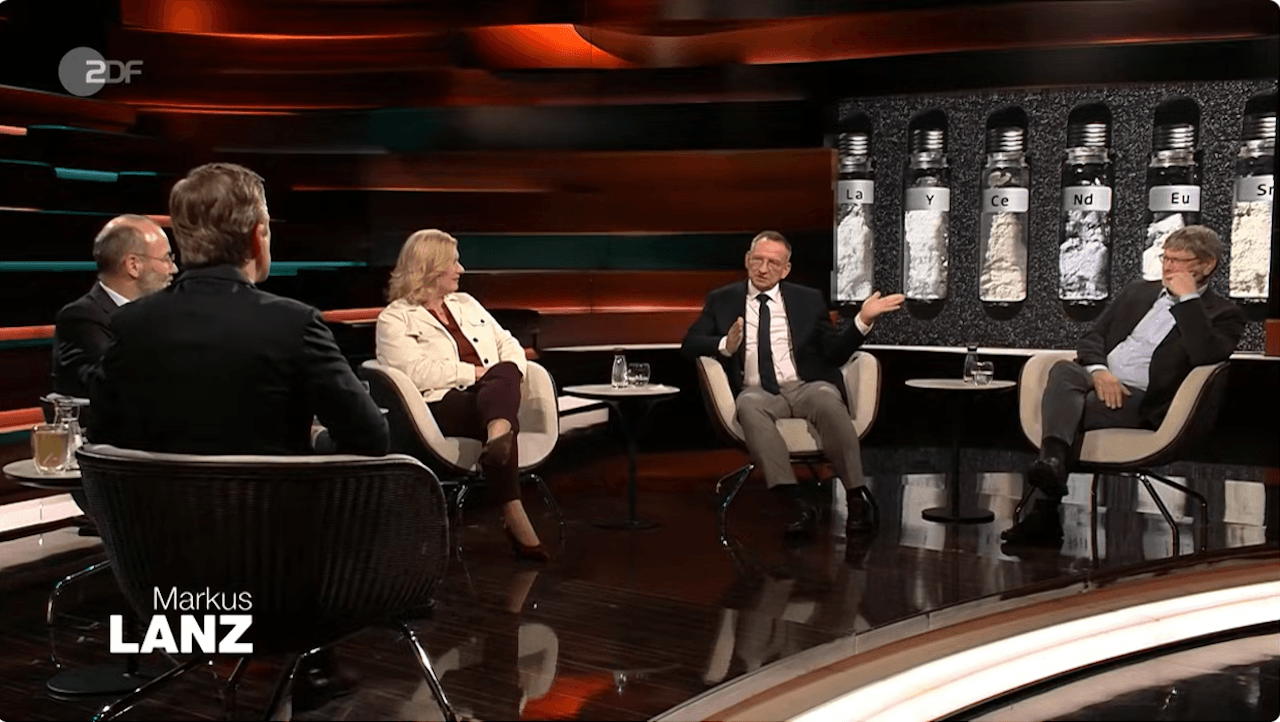
November 2025 felt like the moment Europe finally woke up. While the USA and China have long been operating at high speed, executing their raw material strategies like chess masters, Europe is beginning to stir — still somewhat groggy, but with growing determination.
This month marks the transition from naive trust in global markets to a sober realization: supply security is the new driver of prosperity. Whether Europe can compete depends on how quickly it develops and implements its own strategy.
The Deceptive Calm After the Storm
The month began with news that allowed many to breathe a brief sigh of relief: China announced it would suspend its latest export controls until November 2026. Following the highly publicized “12-out-of-10 deal” between Trump and Xi, this sounded like a de-escalation — yet it is merely a friendly smile in an ongoing power struggle.
At least gallium and germanium are being delivered to the USA again. Nevertheless, a large part of the export controls from April remain active: they still apply to seven heavy rare earths, including dysprosium oxide and terbium oxide. Furthermore, the controls are only suspended for one year, after which they must be renegotiated.
This means China continues to keep its hand on the global thermostat of the defense and high-tech industries. And while Trump celebrates the alleged triumph, Europe remains dependent on the same supply chains that have been considered vulnerable for years.
Raw Materials Policy = Power Politics
China’s export controls are a targeted strategic maneuver — and a direct response to Donald Trump’s tariff policy and the restrictions on high-performance computer chips. In chess, both sides always take turns — tit for tat.
The controlled commodities are classic dual-use goods — crucial for tanks, aircraft, chips, lasers, medical technology, the energy transition, and quantum research.
However, the price increase figures in November had a surprise in store for us: the leader was gadolinium oxide, required for MRI contrast agents, with a price increase of 7.53%. This shows how sensitively the market reacts to the scarcity of rare earths, even in the healthcare sector.
In parallel, a scientific breakthrough caused a stir: gallium-doped germanium becomes superconducting at extremely low temperatures. A game changer for quantum computer development — but only if these materials remain accessible at all.
The “Heute-Show” made the issue satirically visible: it was only when it became clear that smartphones would disappear without rare earths that the crisis became real in people’s living rooms. Andreas Kroll put it precisely on the talk show Markus Lanz: “If you compare the race for raw materials to a 100-meter sprint, China has long since crossed the finish line, the USA is at 20 meters, and Europe is still in the locker room.”
Europe Awakens: New Partnerships, New Priorities
November saw a coordinated European approach for the first time. The strategic realization: security of supply does not arise from wishful thinking, but through partnerships.
Africa Moves into Focus
A new agreement with South Africa focuses on cooperation instead of exploitation.
Objectives:
- Increase local value creation
- Secure access to platinum metals, manganese, and rare earth deposits
- Promote joint projects in the midstream (separation, refining)
Australia: Europe’s Possible Lifeline
The EU is aligning itself with the US strategy:
- Long-term offtake agreements for rare earths and lithium
- Investments in processing plants
- Expansion of proprietary separation technologies
With this, Europe is finally beginning to address its dependence on Chinese refineries — the neuralgic point in the global metal cycle.
Germany is Also Moving
The raw materials fund has increased its cash reserves, making it easier to finance specific projects. Three of them are facing in-depth review — including the lithium project in the Upper Rhine Plain, which is considered a potential European “Tesla moment” for raw material autonomy.
Conclusion: A Rare Opportunity — and Little Time
November 2025 clearly shows: the era of the just-in-time mentality in raw material supply is over. Companies are replanning, states are realigning, and Europe is slowly recognizing the reality of a multipolar world market.
Current figures from the GTAI make this clear:
- 75% of industry players are actively seeking new suppliers outside of Asia
- 70% are relying on direct partnerships instead of anonymous raw materials trading
The demand for secure, traceable supply chains is rising exponentially. Europe now has a small breathing space — nothing more. But it is enough to forge strategic alliances, actively deploy the raw materials fund, and initiate the industrial policy turning point.
Because one thing is clear: those who lose ground in critical raw materials also lose access to the future.