Metals are the new oil – and the greatest investment opportunity of our generation
How the 70s oil crisis crippled Europe – and why the scenario is repeating today with metals. Just as then, we would need an IEA today to avert damage from geopolitical dependence; just as then, investors can profit today.
Yesterday: When oil brought the world to a standstill
In the autumn of 1973, Europe came to an abrupt halt. OPEC throttled production, gas stations ran dry, drivers stood in lines for hours, and factories had to scale back production. Oil was suddenly no longer a given; it had become a geopolitical weapon.
From this state of shock, the International Energy Agency was born – a community that established emergency reserves and thus created the foundation for greater energy security.
Today: When metals are missing
Fifty years later, the situation is eerily familiar – except this time it is not about oil, but about metals. Gallium, germanium, dysprosium, terbium: unassuming names, but without them, no chip production, wind turbine, electric car, or rocket engine can function today.
China controls the lion’s share of these commodities – and uses them whenever it appears politically expedient. When export controls are imposed, it is not just a single factory that stops, but an entire value chain.
The consequences are already palpable. Companies are securing remaining stocks in panic buys, prices are jumping overnight, and investments are being postponed because no one knows if the supply will still be secured tomorrow. It is the same pattern as with oil back then – with the difference that today’s industries are far more dependent on metals than they ever were on oil.
Crisis means opportunity - especially for rapid wealth accumulation
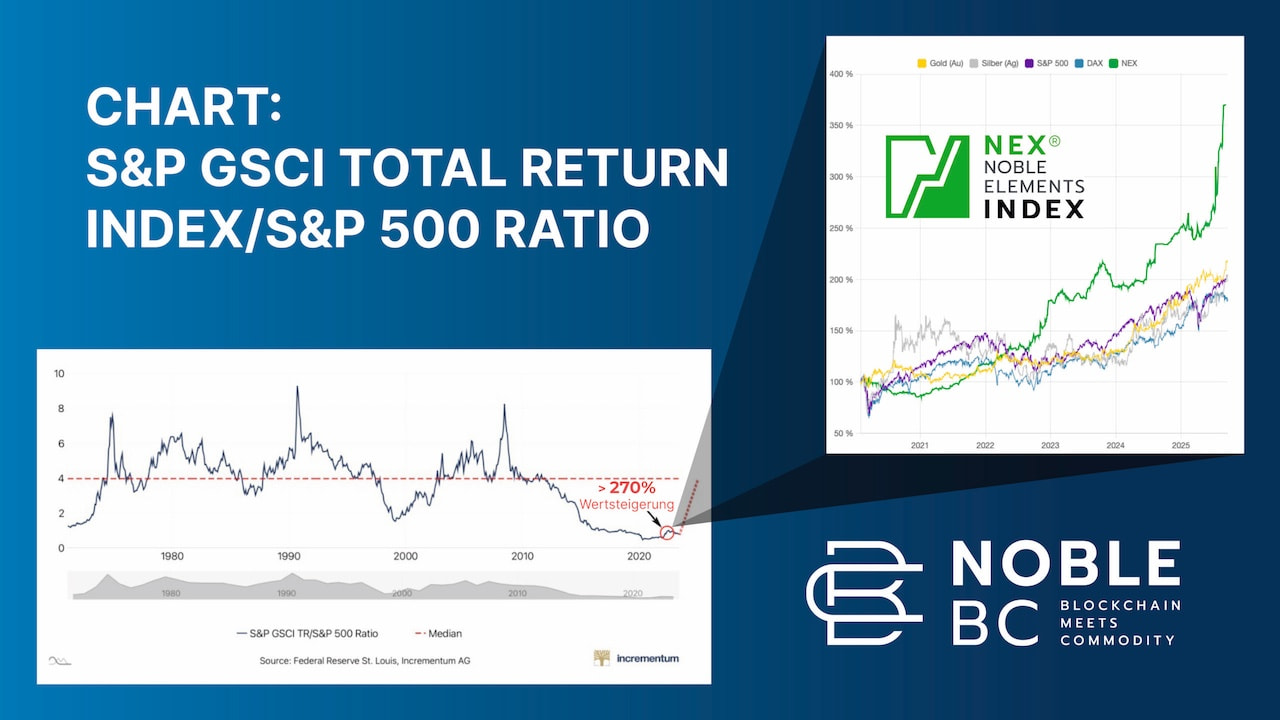
And yet, this crisis holds a historic opportunity. Commodity markets function in cycles. When prices are low, mines close. When production collapses, supply becomes scarce, and prices rise all the more sharply.
With metals, this process takes particularly long because new mines often require more than a decade before they begin production. This means that scarcity persists and prices continue to rise. Experts expect value increases of up to 900 percent. For industry, this is a risk – for investors, it is an opportunity that rarely comes along.
What Europe must do now
The USA has recognized the danger and, with the “Minerals Security Partnership,” has created initial structures to secure its supply. Europe, on the other hand, is still hesitating. Just like in the 1970s, the continent risks remaining dependent on geopolitical power games.
What the IEA was for oil back then is needed for metals today: a consortium that builds up reserves, invests in mines, and diversifies supply chains.
History repeats itself – and rewards the bold!
The picture is clear: history repeats itself. Those who recognized the signs during the oil crisis were able to achieve great profits out of the greatest uncertainty. Today, we stand at the same threshold – only the commodity is different.
Metals are the new oil. And those who act now not only secure Europe’s future but also the chance for above-average growth in value.