Massive commodities fund planned – are government stockpiles coming next?

Much suggests that the German federal government intends to support German companies with a commodities fund. In principle, we consider this a good idea, as the European Commission expects five times the demand for rare earths by 2030.
No more combustion engines by 2035 and a climate-neutral Europe by 2050: These are ambitious goals. Disruptions to the supply chain on the way there would be, to put it mildly, inconvenient. So inconvenient that the fund for the key players may not be sufficient and, just to be safe, a state raw material reserve could also be introduced—an approach that is already being discussed and partially implemented in many countries.
According to Bloomberg, Sweden, for example, is planning to store the rare earths found in Kiruna under state control. This is entirely in line with the European Commission’s intentions. From their perspective, state reserves not only ensure security of supply but also serve as a hedge against market turbulence.
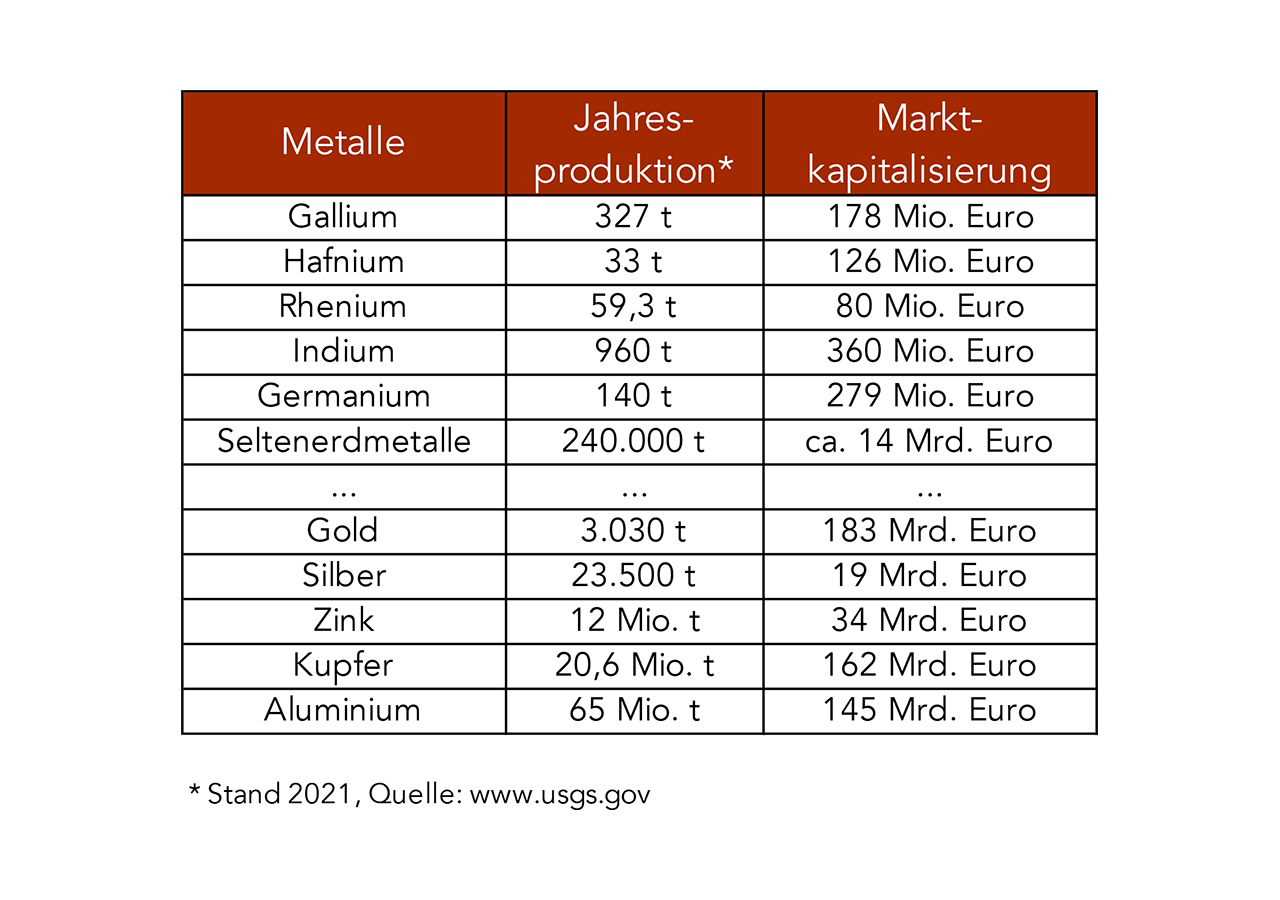
According to information from government circles, the fund, which is currently planned for 2024, is expected to amount to around one billion euros. That is a great deal of money. However, the market for technology metals is very small, as you can see from the table below. A billion-euro “bulk purchase” by the government would therefore significantly disrupt the previously stable price structure. The result could be a price surge of a kind we have not seen since 2010.
The alternative solution
We believe the solution could be different: institutional and private investors can invest promptly in an attractive asset class and, at the same time, help secure the raw material supply for German and European industry.
This is made possible by private commodities companies that bring technology metals and rare earths to Germany and store them here. This minimizes the potential negative impact of government investments on the sensitive price structure of these commodities. In addition, investors can benefit from attractive returns, including tax-free purchases and tax-free gains after a holding period of one year.