Huge Norwegian rare-earth discovery is barely economically viable to mine
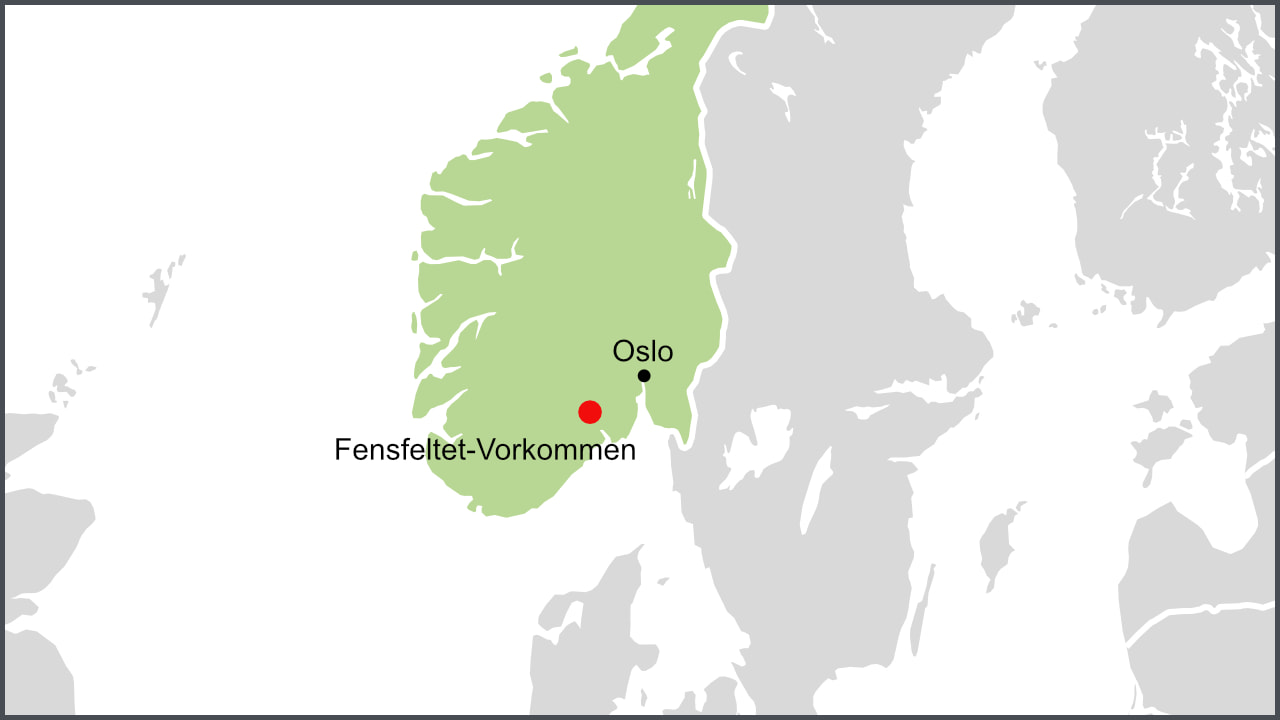
The “Berggeschrey” (mountain clamor) is rising again. Just one year after 2 million tons of rare earths were discovered in Kiruna, Sweden, Rare Earth Norway has topped this find with an even larger discovery of 8.8 million tons in southern Norway. But when can the industry expect the first rare earths from there?
More than four times as many rare earths as in Sweden
The “Fensfeltet deposit” is a mineral reserve totaling 559 million tonnes, containing rare-earth-bearing bastnäsite and parisite ore, with a rare-earth content in oxide form of around 1.57%. Accordingly, the deposit contains roughly 8.8 million tonnes of these scarce metals. 17% of the find consists of neodymium oxide and praseodymium oxide, two light rare earths that are indispensable, above all, for manufacturing high-performance permanent magnets. By comparison, the apatite rock in Kiruna has an ore grade of 0.2%, and the size of the find was 2 million tonnes of rare earths.
Securing Europe’s supply is becoming increasingly urgent
Strictly speaking, the announcement of the deposit is not new, as the Fensfeltet deposit has been known for some time. Rare Earths Norway AS (REN) was founded specifically in 2016 to develop it. However, securing Europe’s supply is becoming increasingly urgent, so REN is now assessing the economic viability of mining, with plans to begin as early as 2030. REN and the Montanuniversität Leoben in Austria, which is working with the company, have also considered downstream processing: the Herøya industrial park is located just 35 kilometers from the mine, where commodities can be processed.
Downstream processing bottleneck maintains dependence on China
However, rare earths are not just any commodities. China is doing everything it can to keep the know-how for processing them in the country and has halted the export of the relevant technology. Europe, by contrast, currently has only one refinery, in Estonia. It is therefore questionable whether the know-how for downstream processing will truly be available in the near term. If this is not the case, the downstream processing bottleneck would mean that dependence on China would remain.
Rare earths need to become more expensive
Building a mine and an associated refinery is very costly. For it to be worthwhile, rare-earth prices must rise. It may still take quite some time before European governments recognize this and subsidize the mining sector accordingly. Until then, REN’s profitability calculations are unlikely to produce a positive result. There is, however, a silver lining: rare earths are currently exceptionally cheap. For investors, this presents opportunities.