Germany lacking raw materials?
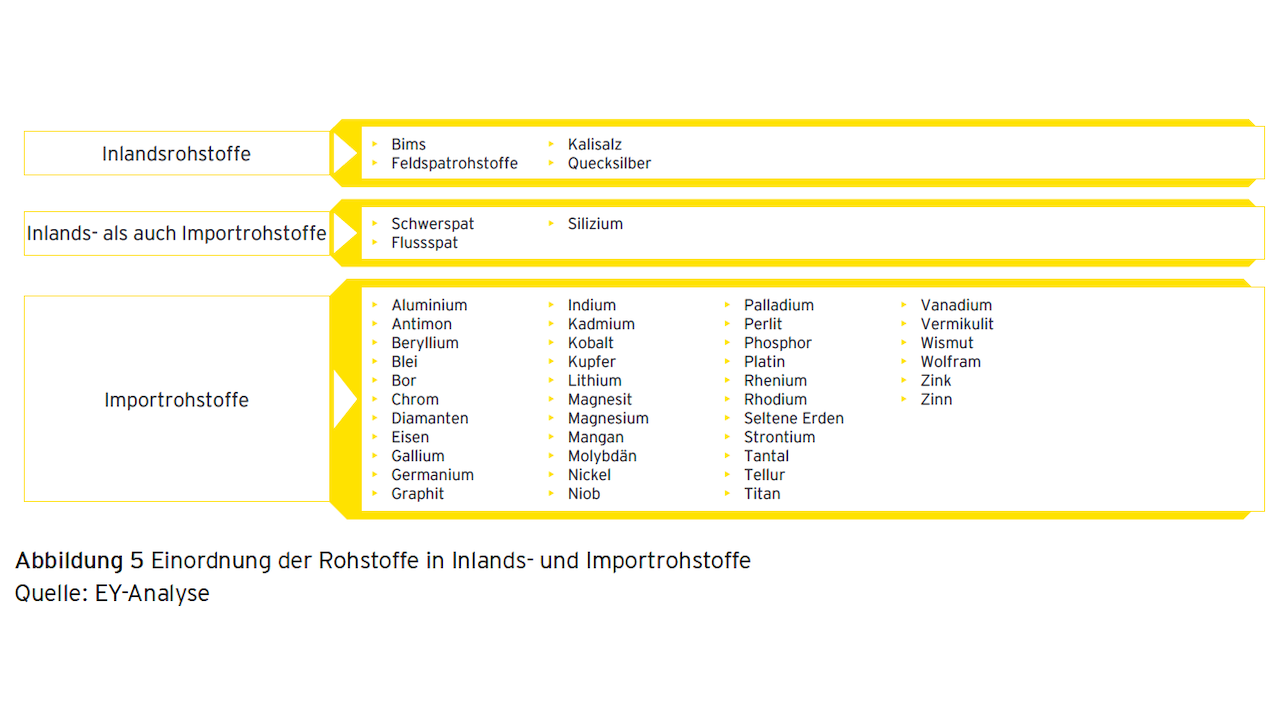
The Ernst&Young study requested by the Federal Ministry for Economic Affairs and Climate Protection has classified Germany as an import country for commodities. The study examined a total of 62 commodities, 46 of which are both supply-critical and strategically relevant. Germany produces four of them itself, including pumice and feldspar, while it has to import most or all of the others.
The basis for the classification of commodities is the consideration of domestic deposits and domestic extraction volumes as well as the coverage of demand. Some of the commodities procured from abroad do indeed occur in Germany. Only their extraction is not worthwhile. For example, the mining of germanium, named after the country of origin of its German discoverer, was discontinued for this reason.
The energy transition and e-mobility are increasing global demand for metals in particular. Some governments are therefore focusing on building up strategic state stockpiles. Although there are also voices in Germany that are in favor of this, our experience shows that this can lead to distortions with the main supplier country, China. In our view, there is only one way to prevent suddenly rising prices and supply shortfalls: storage by professional private companies. Companies such as Noble BC bring strategically relevant supply-critical commodities into the country and offer attractive returns for investors, including tax-free storage and tax-free sale and protection of the investment goods in accordance with the latest security standards.