Do the BRICS countries want to replace the dollar with a commodity-backed currency?
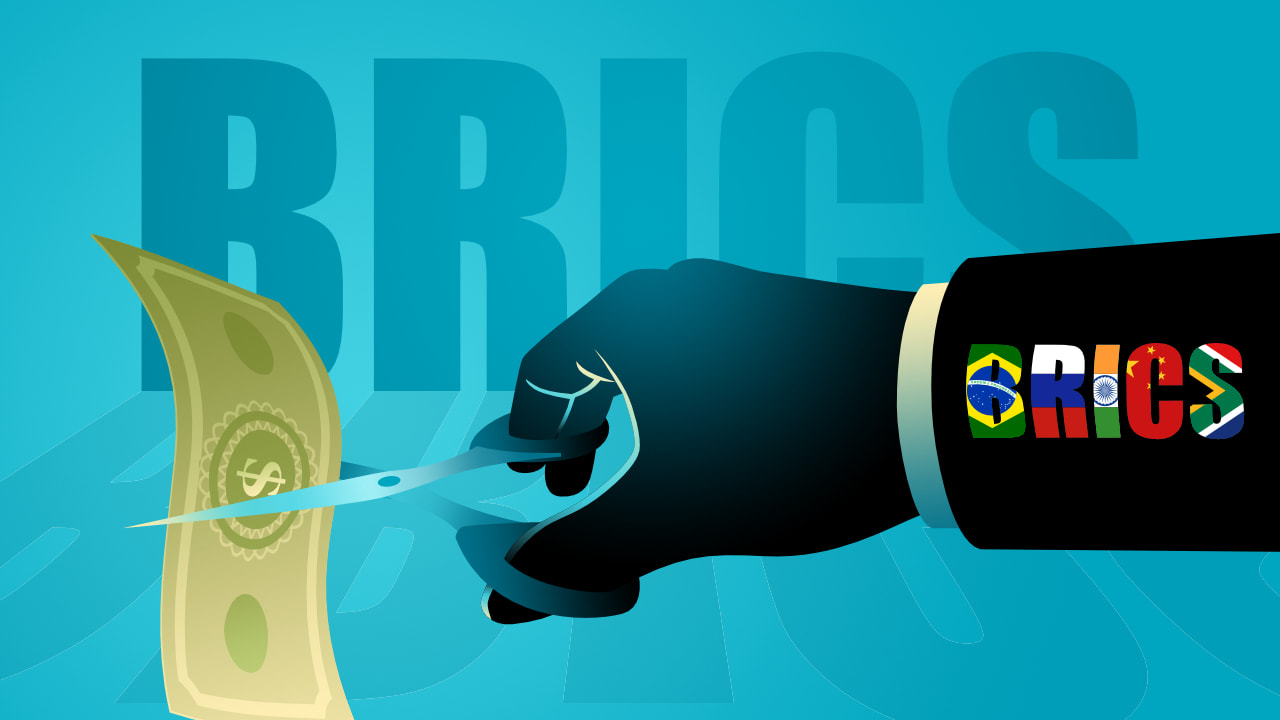
That would be the starting signal for a commodity turbo! For several days now, a hammer has been hanging over various economic news sites on the internet: the BRICS countries want to introduce a crypto currency backed by gold and, according to eXXpress-TV, also by precious metals such as silver and rare earths. Its explicit goal is said to be to replace the dollar in global commodity transactions. The announcement is allegedly planned for August 22 in Johannesburg.
Increased gold purchases by central banks
Some remain skeptical, as the primary source of the news is the Russian propaganda broadcaster RT. In addition, Leslie Maasdorp, Vice President and CFO of the New Development Bank (NDB), formerly known as the BRICS Development Bank, has denied the report about the planned announcement. However, the new currency is not off the table. Maasdorp called it a “medium- to long-term ambition.” One indication that the new currency remains a possible scenario is the recent gold purchases by several banks in the new economies of China, Russia, and India. These could suggest that price increases for the precious metal are to be expected in the near future.
The end of fiat money?
The businessman and author of the well-known book “Rich dad, poor dad”, Robert Toru Kiyosaki, was very shocked by the news of the new currency. He sees the end of fiat money. The author assumes a major crash in which inflation in the USA goes through the roof and the dollar “rushes home”, i.e. loses its status as the international reserve currency. Instead of the dollar, commodities, gold and crypto assets would then serve as a store of monetary value.
Rising commodity prices as a consequence
According to a calculation by management consultant and author Markus Krall, the trading partners of the BRICS countries would have to acquire 16,000 tons of gold in order to be able to pay for commodities in a gold currency. The price of gold would increase tenfold due to the resulting increase in demand, making the BRICS currency the reserve currency. The BRICS countries trade primarily in commodities, the prices of which would rise if the new currency were to actually replace the dollar. This would not only affect gold, but also silver, rare earths and other metals whose prices are at least partially correlated with the price of gold.
It is difficult to predict whether this will actually happen. However, the fact that commodities are currently far too cheap and therefore offer a huge opportunity for attractive tax-free returns is neither a rumor started by RT nor a secret. In the current market environment, an overweighting of commodities in the overall portfolio is almost mandatory and the proportion should be up to 20%.