Chinese gold purchases drive prices to an all-time high – a harbinger of an escalating Taiwan crisis?
Why Taiwan again? As raw materials traders, we keep a close eye on tensions in the South China Sea because some of our most important metals originate from there. We source gallium from Taiwan, as well as germanium and indium from South Korea, and of course rare earths from China. A conflict involving these countries therefore jeopardizes our supply chains.
FAZ podcast considers a Chinese attack on Taiwan possible
What is the most dangerous place in the world? This question opens an FAZ podcast (“Power Struggle of Global Trade”) that examines whether a Chinese attack on Taiwan is realistic. A great deal is at stake—not only because of the immense consequences a military conflict in the Taiwan Strait would have for the global economy, but also because of the potential for a wider conflagration.
A military conflict could have far-reaching repercussions
In addition to disrupted supply chains, the podcast suggests it cannot be ruled out that a military conflict in the region could draw in numerous neighboring states. The Philippines—an ally of the United States—along with South Korea and Japan could join a U.S. intervention. And if the conflict were to spread further, an expansion to India, Pakistan, and North Korea would be possible—nuclear powers with, in some cases, questionable leadership. The podcast may be somewhat exaggerated when it speaks of the “outbreak of World War III,” but an escalation of the conflict would nonetheless be likely.
Donald Trump would likely abandon Taiwan
Two elections next year could determine how the political rift between mainland China and the island of Taiwan develops: the presidential elections in Taiwan and the United States. Lai Ching-te, the leading candidate of the Democratic Progressive Party (DPP), is the front-runner in Taiwan’s presidential election taking place in January. (We reported on the elections.)
For the government in mainland China, he is considered a “troublemaker.” Since the election of President Tsai Ing-wen in 2016, the island’s relations with the mainland have deteriorated—a trend that is likely to continue under Lai Ching-te. And Donald Trump, who may once again be nominated as a presidential candidate in the United States in the same year, is interested only in his own country. Our Managing Director and commodities specialist Andreas Kroll therefore suspects that, under Trump, the United States could withdraw military support from Taiwan. This could further help motivate China to launch an (unpunished) attack.
How long will Taiwan’s “Silicon Shield” delay an attack?
One trump card up Taiwan’s sleeve is the chip company TSMC. China is at least as dependent on its semiconductors as the rest of the world. President Tsai Ing-wen therefore calls the plant the island’s “Silicon Shield.” In addition to silicon, semiconductors consist of metallic raw materials such as gallium, indium, germanium, and rare earths, and are, in a sense, the brains of modern electronics. The military, computers, mobile phones, and medicine all rely on them alike.
China is buying gold to prepare for an invasion
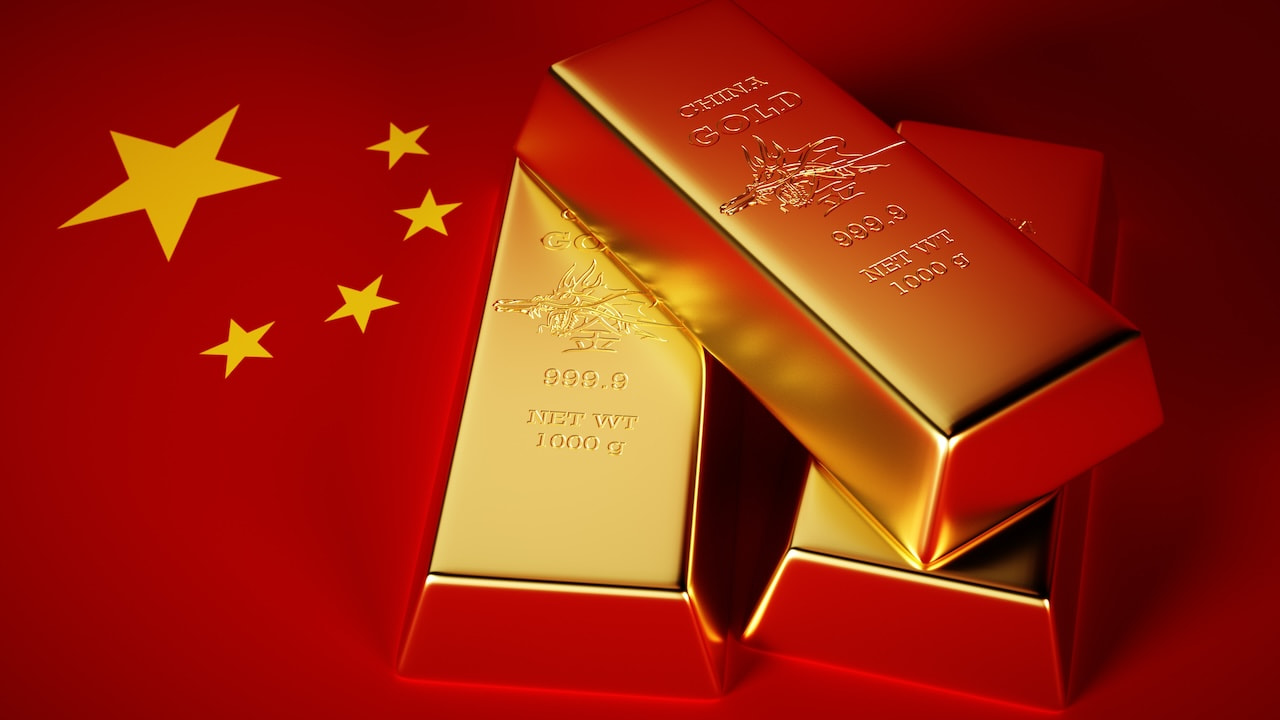
An attack in which the chip plant might be destroyed would therefore be self-defeating for China. But is that sufficient as leverage? Chinese purchases have driven the gold price sharply higher in recent months. China openly admits that this is intended to prepare for a conflict with Taiwan and for U.S. sanctions.
Stay vigilant!
Whether the situation will escalate further cannot really be predicted ahead of the 2024 elections. However, we should all remain appropriately vigilant and ensure that we are as well prepared as possible for any developments.