"We are the essential link between the capital market and the raw material supply."
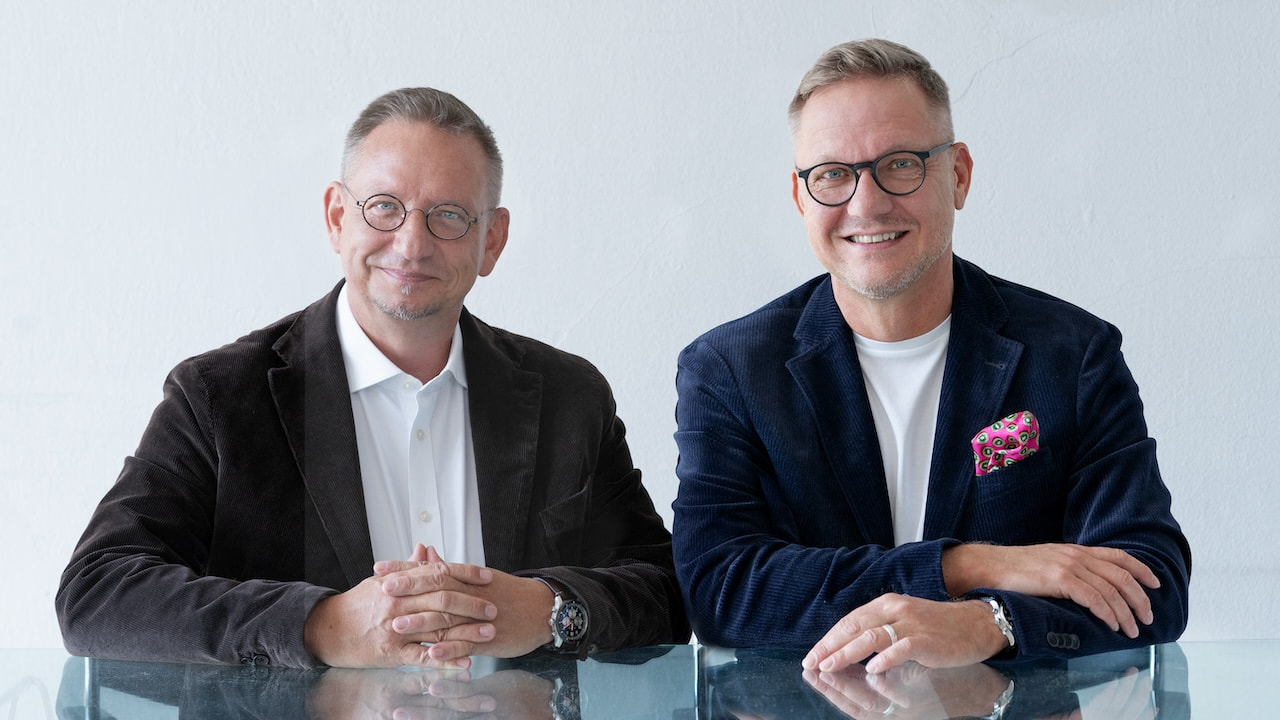
A conversation between David Acker (editor at Noble Commodity Group) and Andreas Pietsch (CEO, Noble BC) and Andreas Kroll (CEO, Noble Elements) about strategic stockpiling, security of supply, and the role of private investors
Mr. Pietsch, Mr. Kroll, rare earths are a hot topic right now, not least because of the recent interview with you in the *Handelsblatt*, which highlights the importance of private investors in building up raw material reserves. Why is this issue so urgent right now?
Kroll: Let me put it this way: The world has woken up. China has imposed further export restrictions, the U.S. and Japan are currently buying up the entire market, and Europe is still standing on the sidelines too often. Rare earth elements are found in every smartphone, every electric motor, and every modern weapons system. Whoever doesn’t have these commodities loses—both industrially and strategically. That’s no exaggeration—it’s the reality we deal with every day. And the situation is set to escalate: The current agreement between China and the U.S., which has temporarily suspended export restrictions on five additional rare earths, expires in October. No one knows exactly what will happen then. It is also uncertain whether light elements such as neodymium oxide and praseodymium oxide will be affected as well. But we are preparing for that possibility.
Pietsch: And that’s exactly where Noble BC comes in. We see it as our mission to give people access to a market that has, until now, been reserved for large institutional investors. Building strategic reserves is not a luxury. It’s a necessity!
Mr. Kroll, Noble Elements has been trading in rare earths for twelve years. What fundamental changes have taken place during that time?
Kroll: When we started out, this was really a niche market for experts. Today, it’s a core geopolitical business. Prices for critical commodities have skyrocketed, and dependence on China has become a real risk for many industries. But what excites me the most personally is that interest from private and institutional investors has grown tremendously. The financial world has come to understand that rare earths are scarce, tangible assets—similar to gold, but with a very direct industrial use.
Why do we need strategic stockpiles at all? Isn’t it enough to just buy what we need when we need it?
Kroll: Supply chains have long since broken down; the supply is now only sporadic and extremely unreliable—now is the time to stock up. Strategic inventories provide industry with real planning certainty. They serve as a buffer between a volatile global market and actual production needs.
Pietsch: We are the essential link between the capital market and the raw material supply, and that is precisely why what we are building together is so valuable. Noble BC manages the capital side and brings together investors who hold physical inventories. Noble Elements handles the professional procurement, secure storage, and marketing of these inventories to the industry. It’s a cycle that works for everyone involved.
Mr. Pietsch, what does this mean, specifically, for customers who invest with Noble BC?
Pietsch: Our customers are part of something bigger and more meaningful, and I mean that quite seriously. Noble BC and Noble Elements belong together. The concept works so well because Noble Elements provides real buyers for the commodities held by our private investors. When someone invests in physical rare earths and technology metals, they’re actively helping German and European industrial companies gain access to these commodities. Independent of China. And here’s another thing: If the industry is truly in a pinch, our investors can easily sell their holdings, while the industry significantly reduces its risk of production downtime. So both sides benefit directly from each other. This isn’t some abstract promise—it’s security of supply in action, from which everyone benefits.
Where are the holdings actually stored, and what are the tax implications for individual investors?
Pietsch: This is an issue that is very relevant to many of our customers. While Germany has unfortunately eliminated the VAT exemption for storage in duty-free warehouses as of April 9, 2026, we store our private customers’ new inventory in Switzerland. There, storage remains VAT-exempt. This is no coincidence, but rather a deliberate decision we made to protect our customers.
Kroll: And that makes a real difference. In Germany, all market participants are currently moving their operations abroad because the regulatory framework simply forces them to do so. We took this step early on and can therefore continue to offer our customers a transparent, legally compliant, and tax-efficient solution. The commodities are physically stored in foreign warehouses, belong to the customer, and can be tracked at any time. Through our digital asset tracking system, Finomet, every storage transaction and every change in inventory is documented in a tamper-proof manner and clearly assigned to the respective owner. In this way, we combine the security of physical storage with a level of transparency that is unique in the market.
But I’ll also say quite openly: The warehousing business in Germany has effectively been dead since April 9 due to the new VAT application decree. That was an extremely reckless decision. It has severely curtailed the private-sector buffer solution that keeps our economy running. Capital and expertise are flowing abroad. This hurts us all.
Fortunately, we were prepared for this scenario. With Seltene Erden AG, we have created another vehicle that enables us to build strategic stockpiles independently of German duty-free warehouses. The subscription period has now been successfully completed, and we can now actively purchase and supply the industry with the commodities it needs.
Will there be a second Rare Earths AG?
Kroll: Yes. The demand is there, the need is growing, and we’ve shown that the model works. Anyone who missed out the first time will get a second chance. More on that in due course.
Mr. Kroll, you said that the financial industry needs to enter this market. Why?
Kroll: Because the government can’t handle it on its own, and industry has struggled to build up its own reserves of raw materials. Although, to be honest, I understand that too: For a long time, it was simply too cheap to source the goods directly from China. It was convenient and reliable. But unfortunately, it was a short-sighted decision for which the Western world is now paying a high price. What’s needed now is capital that can be mobilized quickly and flexibly. That’s exactly what the financial sector can provide. To me, Noble BC is a prime example of how this can work in practice: private capital that serves a strategic purpose while also being profit-oriented. Those two things don’t have to be mutually exclusive.
And what is your view on government stockpiling? Is it even necessary when private investors are increasingly taking on this role?
Kroll: Yes, both have their merits and are not mutually exclusive. Government stockpiles are absolutely vital, above all, for one group of companies: those that don’t even exist yet. I’m thinking of future startups in the defense sector—young companies working on radar technology, sensor systems, or other key technologies. They need access to certain commodities, such as germanium or yttrium, from day one, and they can’t wait for years. The market alone will not close this gap. This requires government planning.
Which commodities are particularly relevant right now, and where do you see the greatest opportunities?
Kroll: Neodymium and praseodymium for permanent magnets in electric cars and wind turbines—that’s the mass market of the energy transition. Dysprosium and terbium for high-temperature applications. And then there are technology metals such as germanium, gallium, and hafnium for semiconductors and defense technology. For all of these elements, the supply situation is tight, demand is rising, and supply outside of China is growing only slowly.
Pietsch: For our customers, this means they’re investing in commodities that are actually needed. Not for speculative purposes, but with real industrial momentum behind them. That’s a difference I regularly sense in conversations. There are already enough completely pointless financial products on the market! Here, we have something truly meaningful that moves Europe—and all of us—forward.
How do you see things developing over the next five years?
Kroll: For the defense industry, we will have established alternative supply chains in three to five years; this is primarily because this industry is not as price-sensitive. For the large volumes required in the fields of permanent magnets and the energy transition, we’ll need more time—realistically, ten to fifteen years. But we’re on the right track. And one thing is certain: no matter what we do, commodities aren’t going to get any cheaper. Those who get involved now are getting in early.
Pietsch: I am truly convinced that anyone who invests in commodities today is making one of the wisest decisions of the next decade. Not only financially, but also in terms of what this investment represents: namely, Europe’s economic capacity to act—and thus the future of coming generations.
Any final words for everyone reading this interview?
Pietsch: This topic is almost self-explanatory once you understand it. It doesn’t take much to convince anyone that dependence on China is a risk. The key is to take the next step: to invest in a concrete, secure, and fiscally sound manner, while at the same time doing something truly meaningful.
Kroll: What we’re doing here isn’t just an investment trend. It’s a contribution to Europe’s ability to act. I’ve been in this market for twelve years, and I’ve never felt such clarity as I do today: We’re heading in the right direction, we have the right partners, and time is of the essence. Anyone who understands what’s at stake now and takes action isn’t just an early adopter. They’re on the right side of history.
David Acker: Thank you very much for this insightful interview!
Noble BC and Noble Elements: Working Together to Ensure a Secure Raw Material Supply and Independent Supply Chains in Europe.
For those who want to delve deeper into the subject: Andreas Kroll and Andreas Pietsch have distilled their knowledge and experience from nearly two decades in the rare earth and technology metals market into their book *The Cocaine of Industry*. It’s a must-read for anyone who wants to understand why these commodities drive the world, who controls the balance of power, and what that means for the economy, politics, and private investors. It offers a genuine behind-the-scenes look at a market that is more crucial to the future of our industry than most people realize.