Australia pushes China out of its rare earth industry
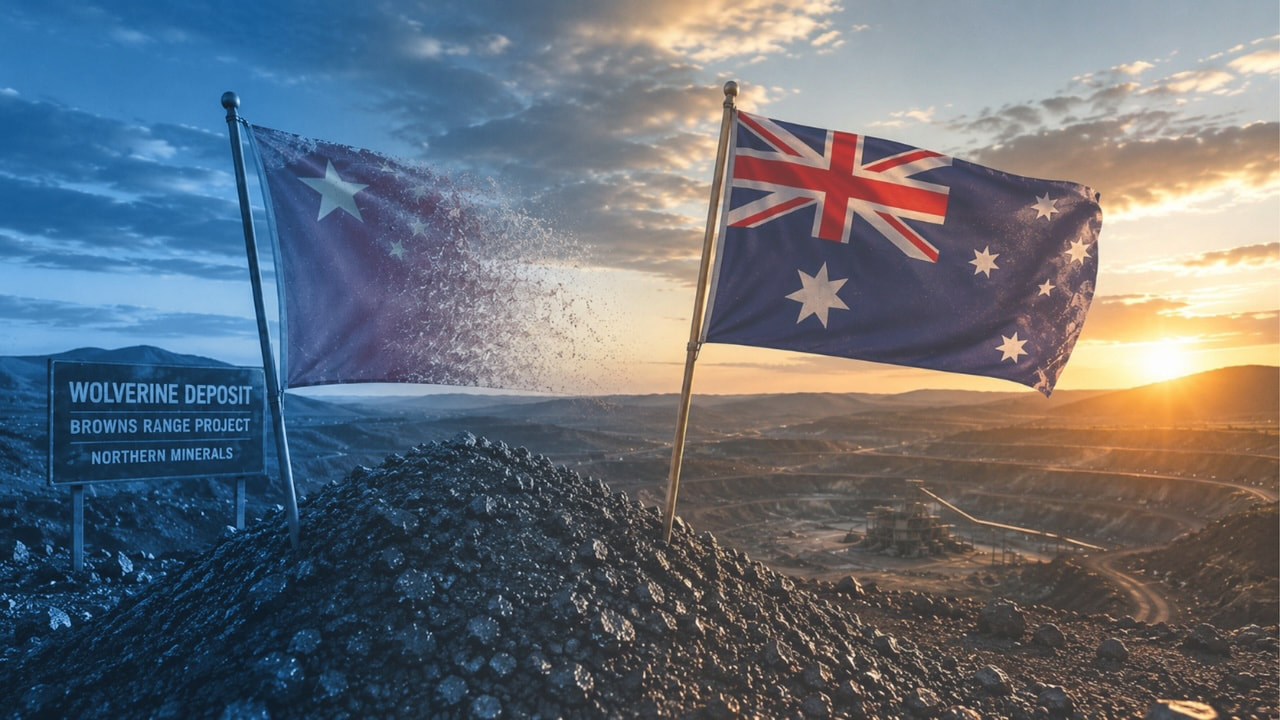
Australia is forcing Chinese investors out of its rare earths industry for the second time – demonstrating how seriously the West is now taking the global commodities conflict.
In 2024, Canberra had already forced Chinese shareholders to sell their stakes in Northern Minerals. Now the process is repeating itself: six more investors linked to China are to sell their shares. The speed with which new geopolitical power blocs are forming in the commodities sector is thus increasing noticeably.
The West is building its own commodity chains
The focus is on Northern Minerals’ Browns Range project in Western Australia. The Wolverine Deposit, one of the most important deposits of dysprosium and terbium outside China, is located there. These heavy rare earths are needed for high-performance magnets, sensors, lasers, wind turbines and modern defense technologies, among other things. To date, China controls almost all of the processing of these heavy rare earths.
This is precisely why the USA and Australia are now heavily promoting the project. Last fall, the two countries agreed an 8.5 billion dollar raw materials deal in order to become less dependent on China. Europe is now also seeking closer ties with Australia. It was only in March that the EU concluded a free trade agreement aimed at securing better access to Australian commodities for European companies.
Focus on the Wolverine depot
The Wolverine deposit is considered one of Australia’s most important deposits of dysprosium oxide and terbium oxide. These heavy rare earths in particular are crucial for high-performance magnets, wind turbines, sensors, lasers and modern defense technologies. The strategic importance of the project for Western supply chains is correspondingly high.
It is therefore no coincidence that Australia is pushing back Chinese investors in Northern Minerals of all places. Canberra and Washington are increasingly viewing the project as a strategic building block for a raw materials market outside of Chinese control.
November could be the turning point
The current dispute over Chinese export licenses for rare earth elements is making the development even more explosive. The current approval phase for certain REE exports to the West expires in November. It is unclear what will happen after that.
The USA is already preparing for a further escalation: From January 2027, Chinese materials will no longer be allowed to be used in American defense equipment. Critical commodities are thus increasingly becoming an instrument of geopolitical power.
A second market emerges
The pressure on China is increasingly generating counter-pressure in the West. Step by step, a separate market is emerging outside of Chinese control. In future, this market will no longer be determined by Chinese prices, but more by supply, demand and geopolitical risks in the West.
The problem is that the processing of heavy rare earths such as dysprosium and terbium is still almost entirely concentrated in China. The world of raw materials is thus increasingly moving towards two separate systems with different price structures: one under Chinese influence – and one that the West is only just beginning to establish.